Sunday, March 11, 2012

There are prudes & hippocrites everywhere!


Last October during a Toastmasters humorous speech contest I decided to do a speech on the subject of issues of old age. Medical science has done extensive research on many aspects on the normal functions of the human body during the aging process. A few weeks ago while at the Doctors office with my wife GG. We talked to her doctor (who was female) about different aging issues. One of those issues happened to have been on the subject of passing gas. Her response was that it was normal for every human being to pass gas an average of 10 times a day. In fact she went on to say that if that did not happen several health problems could result. I then asked her if that action increased with age and she said yes. I researched the subject extensively and found that to be true. So in preparing for my participation in the humorous speech contest I pondered the question of whether to talk about this subject or not. And what would the appropriate language to use that would not ruffle someones feathers.

After a lot of diliberation and discussion with others that I had a lot of respect for I decided that would take the challenge of presenting this issue on. Knowing that using some 4 letter words ie (fart) might be offensive to some people I decided to go with the word TOOT. It drew the picture of what I ment but was not in my mind offensive. In fact it was funny (based on audience reaction & my discussion with others). But as luck world have it, assigned to be a judge in that contest was an individual whose lack of flexability cost me the chance to win the speech contest. With all of the "obscence material in movies, in books, on TV and even in some TM speeches I thought I was on pretty solid ground. but this person found the use of the word "TOOT" offensive. They even went so far as to try to make a big deal of it during a judges training session a few months later. I found their reaction immature and childish to say the least. Have we gone to far with "political correctness and other moral issues that that we cannot discern acceptable from unacceptable. Some individuals cannot keep an open mind? Maybe they should excuse themselves from taking any position (like judging) that has an influence in other people lives. We cannot and should not force our opinions on others. These same people snicker at blue humor and gossip about others but cannot see the humor in something natural. I was presenting real issues that every person over the age of 50 has to deal with. And if we cannot make fun of ourselves we have no right to have opinions of,or make comments about others.

During the past 16 plus years as a Toastmaster, during speeches I have heard the words, "poop, fart, pee, butt & boobs" used in addition to insinuations to the use of certain hand/finger gestures towards other people during driving incidences and guess what, the audience laughed. Since when did the word "TOOT" become the number one word on the America's Most Wanted list???


Freedom of speech is one of the reasons that our forefathers went to war. Yes I agree that there are issues that we should address for the over all moral good of our children and the nation but, let's be reasonable and open minded. Both Mother Nature and God have a sense of humor, thats why the Goony bird and politicans were created.


Use this link and pull up "The Geezer Effect" Oct 14, 2011


Friday, March 9, 2012

Judging or Evaluation are they different?

I have heard this argument from many people so I thought I would throw in my dollars worth. Websters 2001 give us these definitions. Evaluate: To judge, or determine the significance, worth, quality of: To assess, estimate or appraise. Judge: To form an opinion or estimate, determine, value, regard or consider. Sound similar don't they! Most people think that when they judge they are being very logical which says that they are using the left brain functions. Left brain functions relate to numbers, words, lists, sequences, analysis, and logic. Example how an engineer might view, value, analyze or make a decision on something. Right brain functions consist of rhythm (which is why some very specific techniques work in speaking), Wholeness (patterns, and completions), Colour, Dimension, daydreaming and imagination. Example how a painter might view, value or analyze make a decision on something. A lot people think that these functions are totally exclusive of each other. Nothing could be further from the truth. What does the right brain, left brain have to do with evaluation versus judging "EVERYTHING". We are human and being human when we evaluate or judge our likes, dislikes, life experiences, memories, all that makes us human influences our decisions and values. Our values determine the things we see, what we hear, how we perceive what we see and hear and the decisions we make based on those values. Our reticular activation system will focus in on what is important to us at the time we are listening to a speech. All these factors influence how we judge and or evaluate and cannot be separated. The skill of evaluating a speech is a learned pattern of how to analyze speeches (sound familiar). We learn these patterns by watching how other people judge/evaluate. Although there is no totally right or wrong way to judge/evaluate. There are more effective ways. In a toastmasters club we learn to focus in on the good things the speaker says or does. In most evaluations you hear :you did this good, you did that good, ect, ect". "You were so good, I really cannot give you any suggestions for improvement". I can't wait to hear your next speech. Of course the evaluator may be thinking "I and wait for you to bore me again". Phooey! How can a speaker grow if we don't give qualified and effective feedback. Did you join Toastmasters so that you could give great speeches at your Toastmasters Club. I DON'T THINK SO. Or the evaluator will regurgitate the speech back to the speaker. Who ever came up with this useless technique. 1. At the end of the speech can you even remember the speakers opening statement (it should engage the audience). If you can't remember it it was not effective. I will write further about openings at a later date. 2. Can you remember the closing. Did the speaker tie all their points together. 3. What was your (the evaluator/judge) take away value from the speech? Can you clearly explain the value "YOU" took away from the speech to someone else? 4. Did the speaker have any annoying mannerisms. 5. Were the conversations between the speakers characters distinctive? Or did the speaker use the "he said, she said" approach. If so the speaker was giving a monologue and not drawing YOU into the story by making it present day situation. Total accuracy in not important. The purpose of the story is to reinforce the point the speaker is making. 6. Eye Contact. Now here is something that most evaluators/judges do not clearly understand. Swiveling the head from side to side is not eye contact. All it is, is scanning the audience there is no way to make a connections by scanning the audience (more on this later). 7. Did the speaker set the stage so that "you" relived the story by using common words or situations to draw you in emotionally? Emotion is how we make the majority of our decisions. We try to be logical in our analysis but its how we feel in our gut that influences the final outcome. 8. Did the speaker give you a reason to even care about the speech they gave? As I said in the beginning there are different opinions. And there are many factors that influence the answer. It is my goal to give you something to ponder when you are asked to evaluate/judge in the future.

Many Judges/Evauators base their decisions about how a good or effective a speech is based solely upon the entertainment factor. I have seen people win speech contests solely on the entertainment factor alone with no reguard to technical merit, skill, or standard judging criteria. When these speakers go on to the next level and do not do well we cannot figure out why?????

Speaking is a changing field, so must our judging/evaluation skills must change if we are to prepare the speakers in our clubs to be able to be effective speakers when speaking outside our Toastmaster Clubs.

Speakers can only grow if we give them some real time (based on current speaking techniques) suggestions for improvement. Many experienced toastmasters are stuck in a time warp. When we are judging speeches we are evaluating them at the same time. Our decisions are based on our personal biases, experiences and current skill levels. The World Championship of Public Speaking (both semi finals and final will take place in mid August. I will be there and will post my observations on some of the speeches. It should be fun.

Friday, March 2, 2012

I have my topic, what's next?

You have been asked to speak for 10 minutes. You have your topic. What do you do next? Write out your speech. YES, that's what I said. Write out your speech. WHY you might ask? Here are some things to consider. How many words can you effectively deliver in a 10 minute time period? Well first off do you know how many words you speak per minute? To find out you need a stop watch, and a book of average difficulty for you to read. Note your starting point then start your stop watch and begin to read "ALOUD". Read for 1 minute, stop and count the number of words you read. Do this no less than 3 or 4 times each time reading a different passage. Count the number of words you spoke/read each time. Here is an example. (125, 123, 122, 127) The add those numbers together and divide by the number of times you did the exercise. (125+123+122+127=497 497/4=124.25 or 124 words per minute average. So now we take 124 words times the 10 minutes alloted time right! 124 x 10=1240 words for 10 minutes. "NOT QUITE". Even in a eulogy you can have humor. If I am scheduled to talk for 7 minutes I am going to plan at least 2 or 3 humorous stories about that person. After all they were human. I am speaking at a eulogy on June 16th. Lets say I have been given 7 minutes speaking time. I speak at 125 words per minute. There are 50 people in the audience. Maybe I am planning on 3 pauses to emphasis some major points about that person. Here is how the calculation might look. 125 words per minute. 7 minutes alloted time. 875 I can have 875 total words in my talk right? "NO". What about the laughter I planned to use is there an impact? Laughter increases depending on audience size 20 - 30 people = 3 to 5 seconds in laughter 40 - 100 people 6 to 8 seconds in laughter 100 + people = 8 to 12 seconds in laughter So with 50 people in my audience I plan 3 humorous snipets. (8 x 3 = 24 seconds) I now have 6 minutes and 36 seconds available for spoken words. What about the pauses I have planned is there an impact? I have planned 3 pauses at 3 seconds each so 3x3=9 seconds. So I now have 6 minutes and 36 seconds minus 9 seconds will equal 6 minutes and 27 seconds available to speak. So if I round it out to 6:30 seconds of speaking time, I really have 125 x 6.5 = 812 words available to me to present in that 6 and a half minutes. But the most respectful thing to do for your audience would be to plan on 800 words. That would be a 75 word difference from the orginal plan. Finishing in less than the alloted time is the goal. Why is that important? It's about being respectful of the audiences time. It's about being respectful of the other speakers. It's about being respectful of the organizers of the event. And if you want the people you are speaking to, or representing to repect you, you need to respect them by planing ahead. And if you don't know how to keep within time. And believe me they will know if you are over time or not. You will not be successful in your persentation. Have you ever heard a speaker say "I know I'm over time but" What they are really saying is "I'm" more important than you and your time. Without your permission they have no right to "steal" your time. BEWARE, YOUR REPUTATION MAY DEPEND ON IT. I'm Bob Freel and that,s "What I've Learned".

Thursday, March 1, 2012

Call Backs - What and How

On December 1st I was scheduled to give a 5 minute presentation along with 18 other speakers. I had prepared my talk to include a humorous old joke that I had planned to tie into my opening. As I was listening to the 10 speakers before me I noticed that 3 of them made references to their C & D grades in school(to great laughter). At least 2 of them talked about overcoming their earlier poor performances to achieve their college degrees. As I listened it dawned on me what a wonderful opportunity they had laid at my feet. I scrapped my opening and while standing in the wings waiting to be announced I came up with the following. " Howdy --- While sitting in my seat listening to Kent, Tom and Randy give their presentations I notice them bragging about how bad their grades were in school and how hard they worked to overcome them. When I got out of the Army my college grade point average was 1.69 (laughter). I then made comments about the fact that once you earn 120 units you a qualified for a Bachelors of Science Degree. I graduated with 180 units (laughter). In fact I not only have a BS Degree I also have 2 Masters Degrees hanging on my will at home. And I did it the easy way, I married a woman who had 2 of them (lots of laughter). The Definition of a Call back is: To paraphrase - (Stand up Comedy the Bood - by Judy Carter A call back can be a reference to any subject, emotion or phrase that previously got a laugh. The orginal joke must stand on it own. (Step by Step to Standup comedy - by Greg Dean A joke that refers back to another joke performed earlier in the day, often presented in a different context. (Comedy Writing Secrets - by Mel Helitzer) A call back is a reference to something said earlier in a routine or sketch. For a callback to work the time between the original and the callback to that event/joke/comment must be brief. A call back should never be repeated more than 3 times in a presentation. The purpose is to help the audience feel part of a shared experience. For speakers it could mean a reference back to an action/joke/comment or experience that the audience has shared with the speaker and presented in a humorous manner.

Toastmasters In Prison

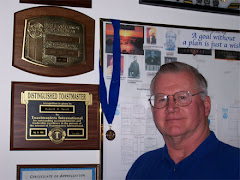
Leadership skills taught to prison inmates By Laurie Rathbun 2/9/2007 2:40:58 PMBob Freel of Menifee does volunteer work that few others are willing to do. One evening a week, he goes to the California Institute for Women near Corona and teaches leadership and communication skills to inmates who belong to a Toastmasters club in the prison. Freel, 64, is a Distinguished Toastmaster and started volunteering in 2003 when he became an area governor of six clubs in the Inland Empire. “It was a culture shock,” he said remembering his first visit to the prison. “I was one of those people who thought lock them up and throw away the key.” He views the inmates now as human beings that have made mistakes. “I think a lot of them have paid their debt and deserve a second chance,” he said. In fact, he has written to Governor Arnold Schwarzenegger to help parole some of the inmates. Darrell Zeller, a former Toastmasters’ district governor in the Inland Empire, founded the club in 2002. Freel helps Zeller and another Toastmaster Randy Amelino run it. Freel said he’s known as the “Professor” because he teaches the inmates how to speak and build their confidence. The club meets on Thursday nights in two sessions and has more than 40 members. It costs the inmates about $65 to become members and most are determined to stay in it and complete the Toastmasters’ Competent Communication manual. Freel said that 80 to 90 percent of them complete the manual and advance to another level. This past year, a club member became a Distinguished Toastmaster, which is the highest recognition attainable. She was the first incarcerated prisoner to do so. “We were all very proud of her,” Freel said. Most of the club’s inmates are serving life sentences. “I have worked with some women who have been very prominent in the newspapers in the last 40 years,” Freel said. He can’t disclose their names due to confidentially rules. Freel has never felt that he was in physical danger from the inmates. He had to go through non-custodial training to volunteer and follows the same rules and regulations as the prison guards. He commented that it’s hard to get other Toastmasters to volunteer with the prisoners because they’re afraid, which he understands. “It’s a different environment,” he said. “You get tested. You have to earn their respect.” Freel became involved with Toastmasters about 11 years ago when he took a Dale Carnegie management and leadership training course through his job. “I went through the course and part of every meeting you got up and gave a short talk for one to two minutes,” he said. He did well and wanted to improve his speaking skills so his instructor recommended that he join Toastmasters. He joined it in 1995 in Corona where he was living at the time. Freel moved to Menifee in 2005 with his wife Gloria, 56. She’s the associate director of the Ontario City Library. He’s semi-retired and works one day a week for the United States Postal Service as a rural route carrier in Canyon Lake. Before that he was an operations support manager for 30 years at commercial and aerospace companies. Freel is a member of five Toastmasters clubs. He attends 10 to 12 meetings a month in Escondido, Temecula, Riverside and Woodbridge. There are 10,500 clubs worldwide with 211,000 members. For more information about Toastmasters International, visit its Web site at www.toastmasters.org. Comments or Questions about this piece? Photo: Laurie Rathbun photoMenifee resident Bob Freel is a Distinguished Toastmaster and teaches leadership and communication skills to inmates at the California Institute for Women near Corona. All contents copyright The Valley News Inc.Arts · The Valley News Inc. 27464 Commerce Center Drive, Temecula, CA 92590

Wednesday, August 25, 2010

Toastmasters District Semi-Finals

On August 12, 2010 I watched 27 Speeches in the New Toastmasters Semi-Finals. These Semi's were created to Replace the former Regional Finals that were held in past years. After re-reading the notes I took during these semi-finals I have come to the following conclusions. 1. That the new Semi-Final process is not as effective as the former Regional Structure. 2. What the former Regional process did was weed out those speakers that won their District contests based on 1 speech. 3. In addition the former Regional process weeded out those speakers that won their District not based on skills but more on popularity. In this years semi-finals I walked away feeling that the majority of the speeches I listened to were of the advanced club level only. 4. I think that more speakers competing at the semi-final level will need to avail themselves of coaching in order to compete at the semi finals. 5. Of the 27 speeches I watched only 4 were of the championship level needed to compete at the International Judging level. 6. Each year many competitiors and audience members walk away from a contest not understanding what happened? Why did the judges choose one contestant over another. Many highly skilled and excellent speakers fall by the wayside due to poorly skilled or biased judging. Will it ever be fair? Probibly not. I will say this. This years winner deserved to win. He was far above those who competed against him.

Friday, August 20, 2010

Toastmasters 2010 World Championship of Public Speaking.

CONNECTION,CONNECTION,CONNECTION EMOTION, EMOTION, EMOTION These are the words I would use to describle the winning speech "The Aviators" delivered by David Henderson of San Antonio Texas at Toastmasters World Championship of Public Speaking on August 14th 2010. But,I can see it now, next year there will be a paliphera of people using props to attempt make a connection with the audience. Please don't mis the point. Davids speech started off with him walking out to center stage wearing a leather flight jacket, leather helmet and goggles. Standing center stage he pulled the goggles down over his eyes and started flying around the stage making airplane sounds and machine gunning the audience. He then talked about how he as his brother Snoopy 2, never lost a battle with the Red Baron. He then talked about wearing his costume to a Holloween party at school thinking he was going to win the costume contest. He lost to a 7 year old girl also dressed as Snoopy. He went on to talk about becoming friends. She became ill with Cycle Cell and passed away when she was 14 years old. The premise of his speech was about why we should love people even if we know they are going to die. He drew his audience into the story. Made them feel the pain and left them with a gift of knowledge. By the time he walked off the stage every person in the audience knew he had won the contest, and it was only half over. The following day several people I talked to had different opinions about the costume, his tears and other aspects of his presentation. But the bottom line was that his costume was germaine to his presentation. His tears came from true emotion, and there was heartfelt sincerity in his voice. The prop (his costume) was an interagal part of his speech and it was only used during those parts where it was appropriate. It was the connection, not the prop that made the speech a winner. As Patricia Fripp says his speech was structurally organized, artifully crafted and masterfully delivered.

Thursday, July 22, 2010

If they don't remember your opening you did "not" connect.

Several times over the last 5 years while evaluating an advanced speaker during a toastmasters club meeting I have asked the audience "What was the speakers opening"? and have gotten no response. I then would give them a memory jogger to see if they remembered, what the opening was, still nothing. The truth is the speakers opening was not memorable. It did not connect with the audience. So what makes a memorable opening? Is it Mr Chairman, fellow members, and friends (oh what a boring start (no connection, no excitement, blah, who cares)). What was the "Take Away Value" in that opening? NOT MUCH. I boils down to who is your audience? Are they engineers, doctors, lawyers,brick layers or a mixture? Some times you cannot tell. But normally your audience is made up of 3 types of people. Auditory People - These are the type of people who learn by what they hear when they bring up memories it the sounds they remember first. They make up (25%) of your audience. The words that you might use in your opening and closing for these type of people are: Hush, Ring, Utter, Tell, Shout, Scream, Clear - just to name a few. These are the people who need you to TELL them what to do. A sentence in your opening for these types of people might be. Ladies and gentlemen give me your ear, the secret I'm about to tell you will change your life. Visual People - These are the type of people who learn, believe, and process information that they can see. These people remember things in pictures. They make up (35%) of your audience. These are the show me people. Some of the words you would use in your opening and closing statements for these type of people are: Imagine, Visualize, Illustrate, Focus, Watch, Look, Picture. A line in your opening for these types of people might be: Imagine you are sitting at your desk when suddenly ___________. These are the types of people like slides. Kin aesthetic People - These are the people whom when they learn or bring up memories they remember how they felt. These are the note takers. These people make up (40%) of your audience. These people relate learning and remembering based on feelings, taste, touch, smell. Words you might use in your opening are: Smell, Stir, Touch, Carry, Feel, Taste, Hot, Freezing. Your possible opening sentence might be: Get a load of this or Remember how it felt when_______________. Close your eyes, you're in the kitchen of your favorite cook, you take a deep breath. You smell your favorite dish baking in the oven? The aroma floats tantalizingly under your nose. Your mouth begins to water! Words you might use are: Smell, Stir, Touch, Carry, Feel, Taste, Hot. When we speak to each other the percentage of how we communicate is: 7% Words 38% Tonality 55% Body Language That's 93% of our communications have nothing to do with the words we say. It has more to do which the tone in which we said. And our body posture, gestures, eye contact. What I am saying is that our priority when writing/preparing a speech to impact the majority of our audience would be: (K) Kin aesthetic first, (A) Auditory second, (V) Visual third. Rodger Jones an authority on Leadership has this example; This is an example of how you might use the K,A,V criteria when preparing your speech. This is an important day! I walked (K) into your office this morning with a feeling (K) of anticipation, and as I sit in front of you now I am excited (K) about the opportunities that exist for us to grasp (K) together. I am hearing (A) from all quarters, the needs your people are stating (A) - we know they need to hear (A) answers. Together we can paint a picture (V) for them of the future - develop a vision (V), so that they will be able to see a clear (V) way forward in the new organization. I realize that during an average conversation most of us would not talk like the paragraph above, but it demonstrates my points. When you use this process when preparing you openings and closings you have a stronger chance of connecting with your audience. After all it's the openings and closings our audience should remember. If they don't we did not connect and there is no "Take Away Value"? If there is no take away value why should they listen to you at all?????? I am reading a great book on body language called: The Power of Body Language How to succeed in every business and social encounter Written by: Tonya Reiman Published by: Pocket Books (I bought it at Barnes & Noble) Remember it's not just what you say, it's how you say it, and the body language you use when you say it. In the coming weeks I will talk about the words in openings. I'm Bob Freel and that's "What I've Learned".

Friday, July 16, 2010

Advanced Evaluations Part 1

I LOVE TOASTMASTERS (TM). With that said there are quite a few area's where I think TM could strenghten their educational program. One of those areas would be in the evaluation of advanced speakers. To paraphrase Patricia Fripp: Who said the following during the Edge Summit in March 2010. The true measure of a Toastmasters club is in the quality of the feedback it gives. Craig Valentine 1999 WCPS said: Most People want Validation, not Education. Here are some observations if have noticed during my 15 years as a Toastmaster. Speeches in most TM clubs range from 5 to 15 minutes. But no matter how long the speech may be the time limit for evaluations of those speeches remains 1-2 minutes. Wouldn't it make more sense to make adjustments in the evaluation time as well. The majority of our evaluators learned their skills mostly by observation of other evaluators. One of the problems with this method is in the inconsistancy of advice given. Other than saying use the Sandwich Method (give a positive statement of what the speaker did will, then an improvement suggestion, another positive you did good statement) there is no other standard or training available. This inconsistancy leads to confusion and bad habits for the speaker and or the evaluator that has to be unlearned at some future date. Over 95% of evaluations delivered in todays Toasmasters club are about validation of what the speaker has done well with very little value in the how to improve the speech.(Example) Your vocal variety & gestures were great. I really like them. I can't think of any thing you can do to improve at this time! Humm!! Were we looking at the same speech? But hold everything, we have not trained them on what to look for. How can an evaluator, give suggestions on something they know nothing about. Yes new speakers and evaluators will not have those skills needed to make useful and qualified suggestions. But once you start to progress to advanced speaking we need to have the skills to know what to look for. I dare not count how many times I have heard "You didn't open your speech with ""Mr/Ms Toastmaster, Fellow Toastmasters, and Guests"". YIKES!! Did I just hear what that evaluator just said?? Once you step out of Toastmasters you never hear Obama, MLK, or JFK start off a speech with the above mentioned statement. They usually enguage their audience first then use some type of recognition statement once the audience is enguated. In fact in the book "Say it like Obama" the author tells a story where Michelle Obama told her husband to stop speaking from his head and start speaking more from his heart". I firmly believe that after completing the CC (Competent Communicator Manual). We should be working on specific advanced skills for both speakers and evaluators. Everyone is willing to give their opinion about what a speaker should do but not everyone is qualified to. Speakers should take all advice and sincerely anaylze it before implementing changes. An advantage in the Toastmasters world of having evaluators with advanced skills would be in consistency that speaker would recieve when they were evaluated. Not only would evaluations themselves improve. But the quality of judging Toastmaster speech contests would be more consistant also. With consistency will come fairness and maybe even a more highly competitive speech contest. For if we truly are going to have 9 people compete in the TM finals shouldn't they be the best we have in that given year. Better evaluations = better speakers, better evalation skills = more consistant judging skills. Samuel Johnson said: Advice is seldon welcome. Those to need it the most like it the least.

Monday, June 16, 2008

Is a eulogy just a speech?

What is a eulogy? How do I put one together? Is it just a speech? Over the past 3 years I have been asked these questions several times. And have always said that yes it is a speech. Recently a very good friend of mine passed away. And just before he died he asked me to be one of 2 people to give his eulogy. Due to seeing so many friends died when I was younger do not normally go to funerals or do memorials. But I could not refuse to honor my friend. Over the past 3 weeks I pondered the questions above and I have come to the following conclusions. Yes, it is a speech. Although it may be highly charged with emotion. It should have an opening, body, and close. It should include positive stories about the deceased and your relationship with the person you are talking about. There could also be some lessons learned. What did they teach you? Humor is OK. In fact I highly recommend it to break the tension. Remember they were human. And humor was part of most of our lives. And close on a positive note. Leave the audience something positive to walk away with. Make the audience see in their minds that person doing or experiencing something good in the after life. Especially if they believed in one. You don’t have to make them saints; many people are far from it. Speakers should not leave the audience in a downer. I’m including a copy of the eulogy that I wrote and delivered on June 16, 2008 to honor my friend Bob Hall. I hope that you can use it as a template for any Eulogy that you might have to give in the coming future. Is it a speech? I think it is. It may be full of emotion, but it does not have to be a downer. You should tell a stories that capture the essence of the person you're talking about. If you are giving the eulogy who is it for? It's for the audience and the person you are memorializing. As the speaker you have a responsibility to be a professional as possible given the circumstances. Will it be easy, "NO". But if you plan and prepare you honor the person you're speaking about by giving the best presentation you possibly can. But the bottom line on this one is to prepare or wing it "you decide". I chose to prepare and get input from others. I’m Bob Freel and that’s “What I’ve Learned”. Below is the memorial I gave for a friend that just past away. To give you some back ground. He was one of the last soldier to actually ride horses that towed artillery pieces at the beginning of WWII. His great grand son is a highly decorated U.S.Marine who now serving on the Presidential Honor Guard. MEMORIAL FOR BOB HALL JUNE 16TH, 2008 (1200/123=91/2min) WHEN YOU CLOSE YOUR EYES AND THINK ABOUT SERGEANT MAJOR BOB HALL WHAT YOU DO YOU SEE, WHAT DO YOU FEEL? WHAT WORDS WOULD “YOU” USE TO DESCRIBE THIS REMARKABLE MAN. <3pause> AUDRY, FAMILY MEMBERS, AND FRIENDS; AS I REFLECT ON THIS CELEBRATION OF BOB’S LIFE THE WORDS THAT COME TO MY MIND ARE: FRIEND, PROUD, COURAGE, LOYAL, STORY-TELLER, AND LOVE. THE FIRST WORD, FRIEND – WE ONLY KNEW EACH OTHER FOR A SHORT TIME YET WE DEVELOPED A FRIENDSHIP, A BOND THAT ONLY PEOPLE OF COMMON EXPERIENCES CAN SHARE. HE WAS FROM ORANGE COUNTY – I WAS FROM ORANGE COUNTY HE WAS IN COMBAT – I WAS IN COMBAT HE WAS STATIONED AT FORT ORD – I WAS STATIONED AT FOR ORD HE WAS COMMISSIONED – I WAS ALMOST COMMISSIONED THAT THING CALLED GEOMETRY GOT ME EVERY TIME. HE WAS IN VIETNAM – I WAS IN VIETNAM HE WAS MARRIED 3 TIMES – I WAS MARRIED TWICE. I SAID TO BOB, YOU WON THAT ONE. . THE FIRST TIME I SAW BOB IN HIS UNIFORM WAS VETERANS DAY NOVEMBER 11TH 2007. I WAS STANDING ON THIS STAGE AND AS I LOOKED OUT OVER THE SEA OF PEOPLE THERE HE WAS, BRASS POLISHED, UNIFORM FITTED, BERET PERCHED PERFECTLY ON HIS HEAD. ON HIS RIGHT SHOULDER WAS THE PATCH OF THE 2ND INFANTRY DIVISION, THE UNIT HE FOUGHT WITH IN KOREA. HE WORE IT WITH GREAT PRIDE. AS THE COLOR GUARD BROUGHT THE FLAG FORWARD THAT DAY HIS AGE SEEMED TO MELT AWAY, HE STOOD UP, STRAIGHTENED HIMSELF AND SALUTED LIKE THE SOLDIER HE WAS. HE KNEW I WOULD DO PUBLIC SPEAKER COMPETITIONS AND WOULD ALWAYS TAKE THE TIME TO ASK ME HOW I’D DONE. THE SECOND WORD I CHOSE IS PRIDE: HE WAS PROUD OF HIS SERVICE TO HIS COUNTRY, THE MEN HE SERVED WITH, HIS FAMILY, AND ESPECIALLY HIS GREAT GRANDSON, ___________. I GAVE HIM A T-SHIRT THAT HAD THE INSIGNIA OF THE 2ND INFANTRY DIVISION PAINTED ACROSS THE FRONT. HE LOVED IT AND WORE IT SO OFTEN I THOUGHT BOY, MAYBE I SHOULD GIVE HIM A SECOND ONE SO HE COULD AT LEAST WASH IT. THE THIRD WORD IS COURAGE: HE HAD THE COURAGE TO STAND BY HIS CONVICTIONS. HE TOLD ME ABOUT TAKING OVER AS THE SERGENT MAJOR (NCO) RESPONSIBLE FOR THE OPERATIONS OF ALL THE PX’S IN VIETNAM (FOR YOU CIVILIANS & YOUNGER FOLKS, THAT’S THE POST EXCHANGE, A MILITARY RETAIL STORE). HE TOLD ME ABOUT HOW SOME PEOPLE IN WASHINGTON WHO TRIED TO PRESSURE HIM INTO DOING THINGS HE KNEW IN HIS HEART WERE NOT RIGHT, BOB REFUSED. HE WOULD NOT COMPROMISE HIS INTEGRITY NO MATTER THE COST. HIS COURAGE UNDER FIRE WAS THE KIND THAT HOLLYWOOD MOVIES ARE MADE OF. THERE IS A LINE ON PAGE 489 IN CLAY BLAIR’S BOOK, “KOREA THE FORGOTTEN WAR”. IT READS “ONLY ONE MAN - AN UNIDENTIFIED 9TH INFANTRY SERGENT WAS SHOOTING BACK”. THAT WAS BOB, ALTHOUGH HE WAS NOT NAMED, HE KNEW WHAT HE HAD DONE AND WAS PROUD OF IT. THE FOURTH WORD IS LOYAL: HE FELT HE HAD A RESPONSIBILITY TO THOSE MEN IN KOREA THAT SERVED WITH HIM. BOB SAID “AS A FIRST SERGEANT I COULD HAVE STAYED BACK FROM THE FRONT LINES WHERE IT WAS SAFER. BUT I FELT I NEEDED TO BE UP FRONT WITH MY MEN SHARING THE DANGERS. KNOWING FIRST HAND, WHAT WAS GOING ON, DOING MY PART. IT WAS NOT MY JOB TO CARRY A RIFLE BUT I’M GLAD I DID.” TODAY THAT SAME RIFLE BELONGS TO HIS GREAT GRANDSON. __________. HE MADE SURE THAT ALL HIS MEN WERE REWARDED FOR THEIR COURAGE (HE WROTE 2 RECOMMENDATIONS FOR THE MEDAL OF HONOR) AND AWARDED THE SACRIFICES ALL HIS MEN MADE DURING THOSE HORRENDOUS DAYS IN KOREA, THE TIME BOB CALLED, “MY DAYS IN HELL”. HE HAD AT LEAST ONE, REGRET: HE WAS SO BUSY MAKING SURE ALL HIS MEN WERE TAKEN CARE OF, HE NEVER ONCE MADE SURE HE WOULD BE RECOGNIZED FOR HIS, OWN BATTLE WOUNDS. UNSELFISHLY THERE HAS ALWAYS BEEN A GAP ON BOB’S CHEST RIGHT NEXT TO HIS BRONZE STAR, THAT’S WHERE A PURPLE HEART SHOULD, HAVE BEEN. FOR ALL OF THE MEDALS HE WORE, IT’S THE PURPLE HEART, THAT WOULD HAVE SHOWN, BOB’S REAL PAIN AND SACRIFICE. THE FIFTH WORD IS STORY-TELLER: BOY, DID HE EVER LOVE TO TELL A STORY !!! EVERY TIME WE GOT TOGETHER IT WAS A STORYTELLING MARATHON WE WOULD TAKE TURNS TELLING EACH OTHER ABOUT OUR LIVES, CHALLENGES AND ADVENTURES, MOST OF THEM WERE ACTUALLY TRUE. SERIOUSLY THOUGH, SOME STORIES OLD SOLDIERS MIGHT NEVER TELL ANOTHER LIVING SOUL. ONE DAY AS WE SWAPPED STORIES ABOUT LIFE, THE PEOPLE WE KNEW AND OUR WARS, HE LEANED FORWARD, PUT HIS HAND ON MY ARM THEN SAID “YOU UNDERSTAND.” (PAUSE) CHILLS RAN UP A DOWN MY SPINE. THE SIXTH WORD THAT DESCRIBES BOB IS LOVE: BOB LOVED THE ARMY – BOB SAID “I WOULD HAVE STAYED UNTIL THEY TORE THE UNIFORM OFF MY BACK. IF ONLY THEY’D, LET ME STAY WITH THE MEN AND NOT GIVEN ME A DESK JOB. BUT, MY FAMILY NEEDED ME MORE, SO I LEFT THE ARMY AND STARTED A NEW LIFE.” HE DEARLY LOVED HIS FAMILY – HE TOLD ME ABOUT ALL 3 OF HIS WIVES I COULD TELL HE LOVED THEM EACH ONE OF THEM. BUT HE WAS ESPECIALLY HAPPY WHEN HE AGAIN FOUND AUDRY, HIS HIGH SCHOOL, SWEETHEART. "THERE WAS NO WAY SHE WAS GOING TO GET AWAY" “THIS TIME”". HE SAID. ON THEIR WEDDING DAY HE WAS 71. "BETTER LATE THAN NEVER" HE SAID. BOB WAS PROUD OF HIS GREAT-GRANDSON AND WOULD HAVE LOVED TO HAVE SEEN HIM AGAIN, BEFORE HE PASSED. THE LAST TIME I SAW HIM HE WAS IN THE HOSPITAL NOT LONG BEFORE HE CAME HOME FOR THE LAST TIME. WE SWAPPED STORIES FOR A WHILE AND I COULD SEE HE WAS GETTING TIRED. “COME CLOSER.” AND WHEN I DID HE PUT HIS HAND ON MY HEART THEN SAID: 1. WE HAVE ONLY KNOWN EACH OTHER FOR A SHORT TIME BUT I KNOW I CAN CALL YOU “MY FRIEND”. 2. IT’S TOO BAD THAT YOU ARE SO MUCH YOUNGER THAN I AM (THERE WERE 28 YEARS DIFFERENCE) BECAUSE I FEEL WE WOULD HAVE SERVED WELL TOGETHER IN THE SERVICE, WE THINS SO MUCH ALIKE. 3. THEN HE SAID “I HAVE CHOSEN 2 MEN TO GIVE MY EULOGY AND I WOULD LIKE YOU, TO BE ONE OF THEM”. I CHOKED UP AS I ASKED, WHY?? "YOU KNOW I DON’T DO FUNERALS". HE SAID, “BECAUSE WE UNDERSTAND EACH OTHER AND YOU KNOW THE RIGHT WORDS TO SAY. “ I AM HONORED TO DO THIS FAVOR FOR YOU MY FRIEND. (PAUSE) HE LAID HIS HEAD DOWN ON HIS PILLOW , TOOK MY HAND: “IT’S TIME FOR YOU TO GO”. THEN,CLOSED HIS EYES. SOMETHING TOLD ME THIS WOULD BE THE LAST TIME WE’D EVER SPEAK. I STOOD THERE FOR A MOMENT, LOOKING AT MY FRIEND, THEN SLOWLY BACKED OUT OF THE ROOM. BOB LIVED A LIFE OF LOVE, CHALLENGE, AND ADVENTURE. FROM A SMALL FISHING VILLAGE CALLED NEWPORT BEACH CALIFORNIA. IF YOU CAN IMAGINE NEWPORT BEACH BEING A SMALL FISHING VILLAGE. TO THE FREEZING COLD ROCKY MOUNTAIN SLOPES OF NORTH KOREA. TO THE STIFLING HEAT, AND HUMIDITY OF SOUTH VIETNAM. WHEN I CLOSE MY EYES I CAN SEE BOB SMILING, I CAN FEEL HIS PRIDE, AS HE SERVES AS THE BRIGADE SERGEANT MAJOR FOR THE ANGELS OF THE 2ND INFANTRY DIVISION, FIGHTING THE WAR BETWEEN GOOD AND EVIL. THESE ARE THE WORDS AND THOUGHTS THAT COME TO MY MIND WHEN I THINK OF MY FRIEND, BOB HALL (PAUSE) … I WILL MISS HIM.

Sunday, June 8, 2008

Region 2 International Speech Contest

On June 7, 2008 I attended the Region 2 International Speech Contest. I have been requested to give my impressions on how the speeches went Here is “What I’ve Learned” In speaking order I will give descriptions on the placing speeches. All others I will give brief comments. 1) DAVID ADAMS ( District 49 – Hawaii) Speech Title “Small Stuff” This was David’s 3rd or 4th try at this title (He did not place). Paced a lot, poor eye contact, favored one side of the audience, seminar style delivery. In order to make it beyond this level David needs a coach who had been there done that. 2) JOE VALERY (District 12 –Riverside/San Bernardino Counties) Speech Title “A Haul Away” Placed 2nd in the contest Joe started off with a great story on how his wife got him into the Junk Hauling Business even though he already had a full time job. He talked about going to homes and hauling away their junk. He transitioned into how we all have junk in our lives and how much better life would be if we unloaded our junk. Good delivery, pausing, eye contact, and fitting close. Facial expression and gestures were appropriate to the message being delivered. 3) CARL WALSH (Founders District – Orange County & East Los Angeles) Speech Title “How Dumb Can You Get” Placed 3rd in the Contest Carl started off with a story about his grandfather asking him what he wanted to do when he grew up. He responded he wanted to be a tiger. He transitioned into how we should get dumb about what we can’t do and our self limiting ideals and go for our dreams. 4) BOBBY DALE LEE (District 4 – San Francisco, Santa Clara, Monterey, San Mateo) Speech Title “Somebody Else” Bobby speech was about taking action and not to wait for other people to do it for you. He talked about growing up in Alabama during the 50’s/60’s. Lynchings as he was growing up his mother always told him to do it himself but then when he started to work on integrations issues she wanted him to let someone else take the risk. Hard to understand at times, speech somewhat a downer. 5) SUSAN MAYBERRY (District 52 – Downtown LA, Burbank, San Fernando Valley) Speech Title “10 Items or Less”. Speech was about kindness, transitions were weak, little vocal variety or gestures. Hard to hear at times, speech somewhat of a downer. 6) KRISTIN HALVIN (District 5 – San Diego) Speech Title “Now That’s Deep” I felt that she was more speaking at the audience than with the audience. Almost, a lecture feel to her presentation style. Somewhat overwhelming at times overly, loud vocal presentation with little eye contact during the speech. I suspect she went over time. 7) ROBERT MacKENZIE (District 1 – West Los Angeles, Long Beach) Speech Title “My Alter Ego” Winner of the Contest Robert talked about creating an alter ego named Bob. He started out early in his school life and progressed the story giving examples about how bob would always have him say “NO” in order to avoid pain and risk. Then he met his wife and it forced him to reevaluate how he approached life. He talked about having a heart attack and his family, and friends gathered in his hospital room to support him. His gestures and how he made you believe that Bob was right there on the stage with him made his speech very believable. His transitions were clean and his close was right on. He tied all the elements together, his stage use was well done. He was just a slight bit better than Joe Valery. 8) Christine Kitchenmaster (District 33 – East Central California, Southern Nevada) Speech Title “A Word of Kindness”. Speech was somewhat Loosey Goosey, did not fit together well, so soft spoken she was hard to hear at times. She was more of a cutesy presenter than a contest speaker. Christine used a gesture that was to signfy the ups and downs of life but did not support that gesture by looking at it. This makes the gesture look like a wild hand movement and not a meaningful part of the speech. When we gesture it must be congruent with the words that come out of our mouths. SUMMARY: Having reviewed over 155 World Championship Speeches and at least 30 Regional Level Speeches I came to these conclusions about this contest. Like most high level contests one or two (Joe and Robert) were head and shoulders above the rest. There speeches were well written, practiced and coached. The 3rd place winner was at the next level down and deservedly so. Several of the speeches were entertaining but not of championship quality. The quality of judging at this level is superior to that at the District levels and lower due to the fact of knowledge, experience and expectation of performance. Being cute can possibly get a speaker through the District level but it cannot at the Regional level. The reason that a speaker has to write a new speech at the Regional and Finals level is to challenge their ability to be consistent and perform at a high level worthy of a champion. Having less time to perfect their speeches separates the pretenders from the contenders. Unfortunately most speakers can write one great speech sometimes two great speeches but fall very short when it comes to writing three great speeches This fact is very evident when you watch the videos/DVD’s of the World Championships of Public Speaking. Having analyzed 17 years and 155 speeches given at the World Championship level it is obvious that at these levels it is more about skills in delivery, writing, and knowing your audience and less about who you know or who knows you. In speech competition it is the Judges (therefore the audience) that is King. If you connect with the audience you connect with the judges. Remember it is Heart, Head, Humor in that order that makes the speaker a winner. So my friends thats "What I've Learned"

Friday, May 16, 2008

WIN, PLACE, SHOW


WIN, PLACE, SHOW


Contains 9 championship speeches written by the First Place - Ed Hearn, 2nd Place - Douglas Wilson, and the 3rd Place winners of the Toastmasters 2006 World Championship of Public Speaking.


Only $19.95 this book is a great resource for any person interested in the thought process that goes into creating a winning speech.


This book will take the reader through how these 3 winners developed their winning speeches. In addition you can read the speeches that each wrote and delivered that allowed them to win at the Club, Area, Division, District, Region and World Championship of Public Speaking .


I felt this book gave me great insight into the thought and emotional process that each winner went through in developing and delivering their winning speeches.


Here is a short quote from Douglas Wilson the 2nd Place Winner of the 2006 Toastmasters World Championship of Public Speaking (WCPS). In his introduction for his District 58 (South Carolina)winning speech "It's Not About Me" he wrote.


"It was not an easy process. I had to get in touch with emotions I was uncomfortable talking about and put those emotions out there for the audience to feel, so they could learn the lesson too". He goes on to talk about letting his audience see and feel. He used 3 keys to write his wining speech they are Head, Heart, Lesson Learned (more about this at a later date).


I highly recommend WIN, PLACE, SHOW to any competitor/judge or serious speaker interested in how a winner of a speech is created.


You can order it through rich@richhopkins.net


I'm Bob Freel and this is:


"What I've learned".

Tuesday, May 13, 2008

So you think you're ready to speak!

You have been scheduled to speak. You have picked your topic. Are you now ready to go? Here are some questions that you need to answer before even starting to prepare your speech. 1. What is your premise? If it is not clear to you what you are going to say do you really think that your listener will know what your talking about. 2. Can you sum up your speech in a paragraph of 50 words or less? If not your premise is not clearly defined. 3. How many points are you going to make? Any more than 4 within an hour and you will fill your listener sensor overload. 4. Does your audience really need to hear what you are going to say? Or are you going to talk about what interests you reguardless of the audience? 5. How are you going to open? Will the listener remember your opening 5 minutes after your done? Same with your closing. 6. Remember no matter what you may think the listener is thinking who cares! Why should we listen to you. 7. What emotions do you want your listener to experience/relive? 8. What is the take away value for your listener? As speakers we owe them value for their time. Remember: "IF YOU ARE AFRAID BEFORE YOU SPEAK YOU ARE MORE CONCERNED ABOUT YOURSELF THAN YOUR LISTENER". When we are more concerned about what is important to the listener and not ourselves then we are becoming better speakers. I'm Bob Freel and this is: "What I've Learned".

Friday, May 2, 2008

Where does my next speech come from?

Most all of us have pondered where do I get my material for my next speech? Here is some food for thought. We all have stories to tell, none of us lives a life where nothing happens or has ever happened. Over the coming days sit down and create a list of headings. I did mine in Microsoft Word. Make as many headings as you feel you need there are no limit or right or wrongs here. Here are some examples of the headings/sub headings for events, people, ect in my life. 1. Before High School. (Schools, Teachers, Friends, ect) 2. High School.(I bet there are stories you have forgotten) A. Friends. B. Clubs C. Sports Teams (Football) D. Other stories or events 3. College (If you attended more than one name each). An example might look like the following. A. Orange Coast College B. Golden West College C. Cochise College - Arizona D. University of Alaska. 4. Military Service (list duty stations, training) A. Fort Ord, Calif B. Fort Benning, Ga C. Vietnam (places in country and stories for each) D. Redstone Arsenal - Huntsville Alabama E. Fort Wainwright - Alaska F. Fort Sill - Oklahama G. Fort Carson - Colorado H. US Army Recruiting Command - Garden Grove Calif I. US Army Induction Center - Los Angeles, Ca J. Fort Huachuca - Arizona E. Cal State University Long Beach. 5. Companies I have Worked For. A. Foodmaker Corporation B. Potlatch C. Franklin Ect 6. Places I have Lived. A. Hamilton Ontario Canada B. Gardena, Calif C. Westminster, Calif D. Montery, Calif E. Huntsville, Alabama F. Fairbanks, Alaska G. Lawton, Oklahoma H. Colorado Springs, Colorado I. Garden Grove, Calif J. Huachuca City, Arizona K. Corona, Calif L. Menifee, Calif ECT 7. Toastmasters. A. Club Name, Number, Location, Year, Offices Held, B. District Offices Held (ie Area Governor) C. Contests (Types, years, speech titles, where you placed, lessons learned). 8. Childern/Grand Children. A. Sean (Wife Joyce) 1. Son Jacob B. Marnie a. 1st husband - Earl Pappas 1. Helena Ann 2. Christian Bernard b. 2nd husband - Tony Squier 1. Jackee Levar C. Patrick (Wife - Kimberly Vandereyken) 1. Bradley 2. Amanda D. Megan 1. 1st husband - Michael Croxton a. Ashley 1. Holloween Candy - Pause. 2. Riding bike 5 yrs old - hot, brain melt, heart cry 3. How else train him 4. Its fat like yours. Cars you owned, Vacations (name places), Names of People who were significant in your life, Any other major event, person, or story that you remember as time goes on. One you have this list you can start adding additional heading/subheadings (key words that help you remember stories about each person or event). Keep a digital recorder with you or a small pad and pencil. Things will happen that will jog your memory or develop new memories. Now you have an outline for developing personal stories to support the main ideas that you want to deliver to your audience. By putting it on your computer you now have the flexability to update the list as events, new ideas, or stories from your past present themselves to you. Now you can expand each catagory as you remember people, lessons learned, or events from your life. I was amazed at the memories that came back to me as I wrote this list. And as time goes by my list continues to grow. As you can see this list could become quite large over time. But think of the possibilities. A second benefit of this exercise in that you now have an outline for a journal that can be passed down for future generations. I'm Bob Freel and this is: "What I've Learned".

Thursday, May 1, 2008

San Diego Northern Division Contest

On 4/11/08 I competed in the District 5 (San Diego) Northern Division Contest. Here are some of my observations. 1. The venue selected was one of convience and not one that was in any manner conducive to the Art of Public Speaking. It was outdoors only 50 yards from a 6 lane highway where trucks, cars and emergency vehicles roared up and down the road constantly. 2. The speakers did not get the opportunity to eat due to the fact that the speakers briefing was held just as the food was brought out. The briefing was held a 1/2 hour late and only 15min before the first contest. 3. The intermission between the Evaluation contest and the International was over a 1/2 hour long due to the lack of planning. 4. Being a seasoned competitor and a long time diabetic I should have known better that to have not eaten since 2pm. The International started at approx 8 pm . 5. During my speech my blood sugar crashed, you can see in the video I made 3 errors I would normally not make. And I began to babble during my closing. In addition when I took a hold of the hand held mike my right hand began to quiver. This is normal for me due to my femural tremors, but the shaking was more pronounced due to my low blood sugar. I grabbed the mike with both hands in order to keep it steady. Many of the judges took points away from me because of this action. All the problems caused by my blood sugar were my own fault. A lesson I learned the hard way. 6. The venue and the judging left a lot to be desired. When picking a venue the person in charge needs to consider the impact on the audience and competitors. Judges need to put their prejudices aside and find a way to compare the speakers against the established judging criteria and understand that the contest is not a popularity contest but a skill contest where all the judges scoring criteria must be considered. And until they do D5 and D12 will never have anyone finish in the top 3 of the WCPS. A good example of this is currently being played out on American Idol. I started watching the show this year for 2 reasons. 1. To see what the competition is all about. 2. To see how the judges rate the performers and compare it to what the possible popular vote shows. There is one performer out of the 4 finalist whom is being kept on the show by popular vote, not talent. His range is limited but he's "cute". While more talented people are being voted off he remains. I predict that the only remaining female will go next (syesha). Just like Dancing with the Stars popularity is more important than talent. Lets hope that in the end real talent will prevail. American Idol, Dancing with the Stars, Survivor, Toastmasters World Championship. It leads one to wonder did the "Real Champion" win or was it just the one with the most popular, cutsie or luck? Maybe in some instances a little of all 3. I'm Bob Freel and these are just my observations based on: "What I've Learned".